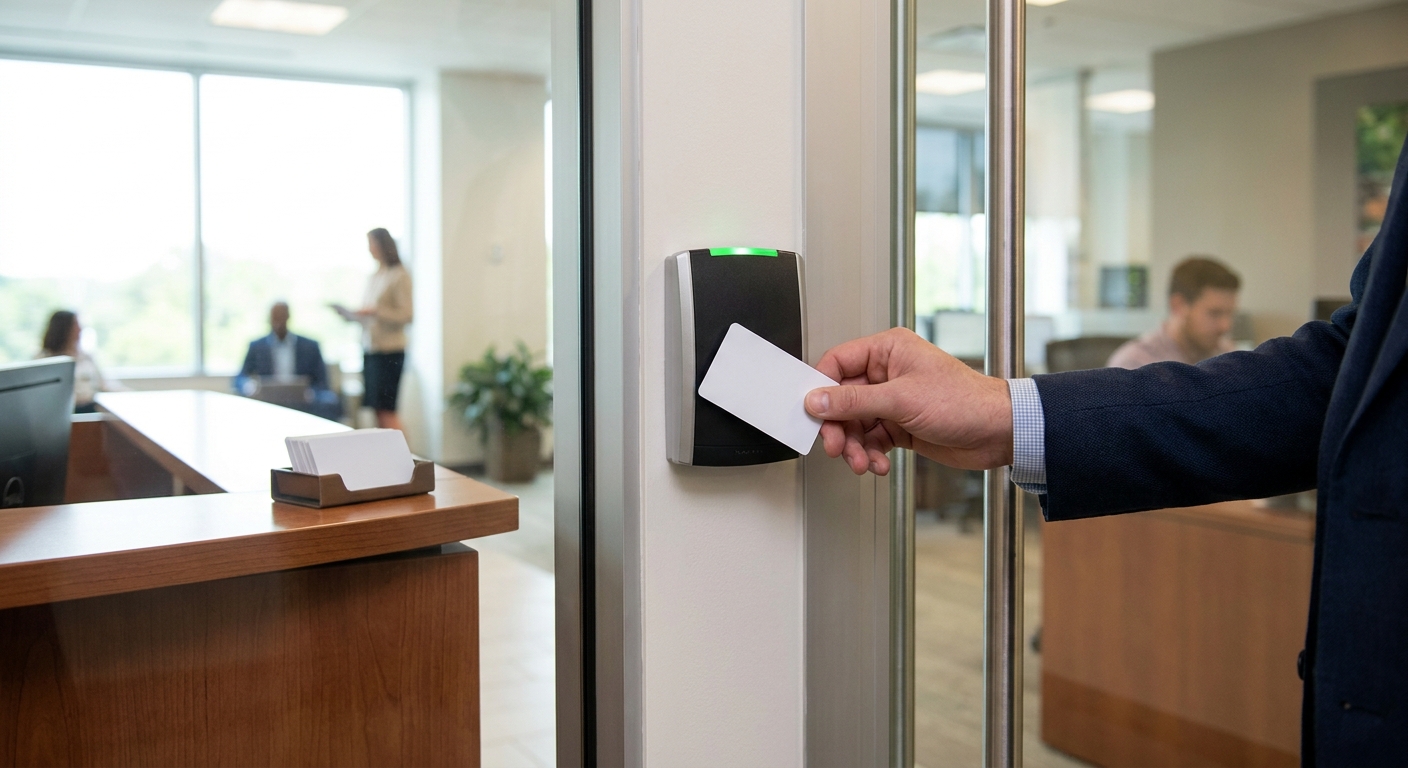
Proximity cards for office access control let employees badge into doors without swiping a mag-stripe or fumbling a key, but the credential is useless if it doesn't match your reader's frequency and your printer can't encode it in-house.
- Bodno's A-Series Smart Card Encoder (OmniKey 5127CK) handles 13.56 MHz iCLASS and MIFARE credentials for proximity cards for office access control - Buy it if your readers are already contactless.
- 125 kHz HID Prox cards still run a large share of office door hardware installed before 2015; match frequency before you order blank stock.
- The Magnetic Stripe Encoder Module at $499.00 covers legacy panel systems but Skip it for camera-monitored, high-security doors.
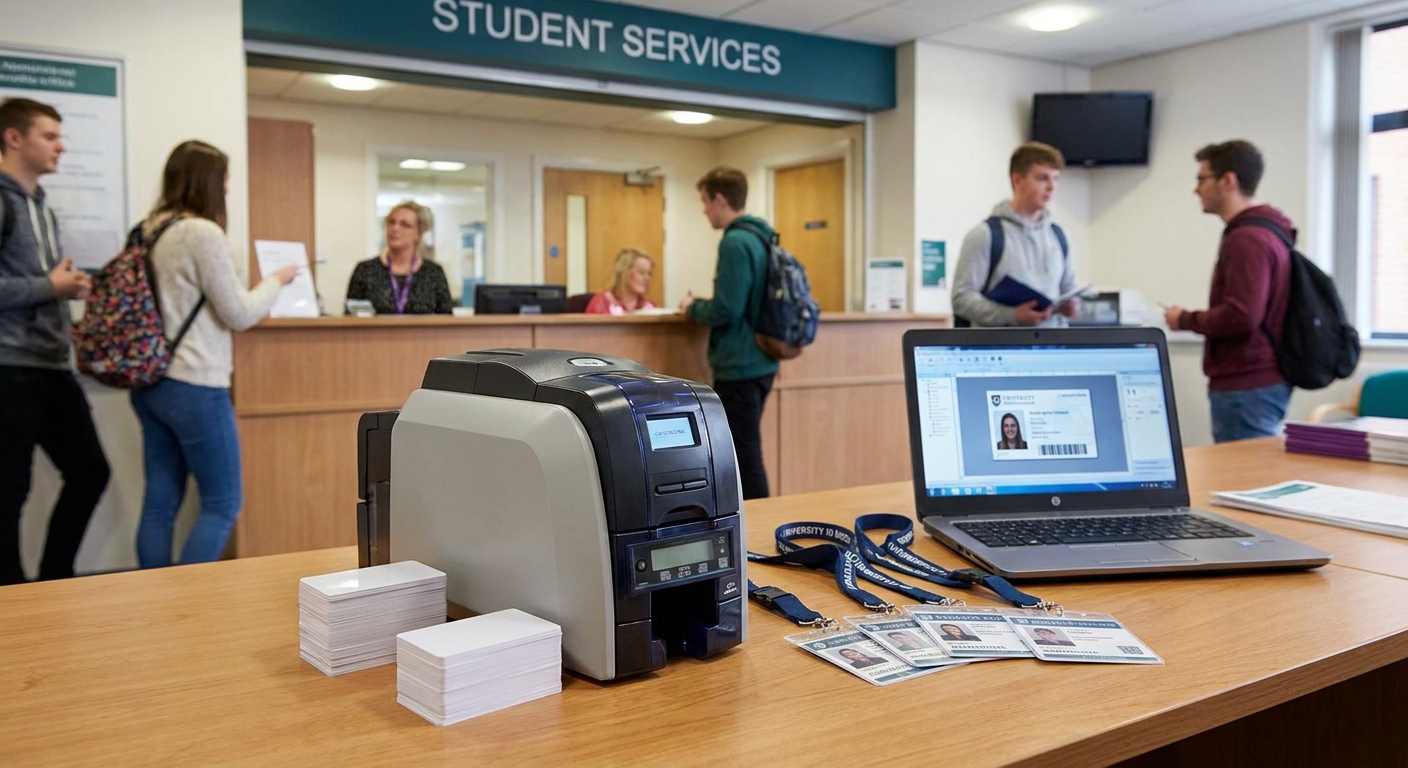
- Pair either encoder with the Magicard 250X printer to badge and encode proximity cards for office access control in a single pass.
- CR80, 30 mil card stock is the standard thickness for both proximity and smart card formats in 2026 - anything thinner jams readers over time.
Why this matters
An office that buys the wrong credential format ends up with a box of cards that never talk to the door reader. That's not a hypothetical - it's the most common return reason facilities managers report when they order access cards without checking the reader spec first.
Bodno builds ID card printers and encoder modules specifically so offices can print the badge and encode the access credential in one run, instead of ordering photo badges from one vendor and blank prox cards from another. Get the frequency and encoding hardware right up front and you skip a second purchase order in 2026.
Who this is for
This guide is for office managers, IT administrators, and facilities staff at businesses, schools, or healthcare organizations who are choosing or replacing proximity cards for office access control - whether you're standardizing a multi-door system or replacing a batch of worn-out cards from an older vendor. If you're evaluating an ID card printer that also needs to encode the credential, the buying criteria below apply whether you print 20 badges a month or 2,000.
What to look for in proximity cards for office access control
Frequency match with your existing readers
Check your door reader's spec sheet before you order a single card. 125 kHz HID Prox and 13.56 MHz contactless (iCLASS, MIFARE, DESFire) are not interchangeable, and a card in the wrong frequency won't register at all, even if it looks identical to the one that works.
Read range for your door layout
Most 125 kHz Prox cards read at 2 to 6 inches; 13.56 MHz smart cards typically read closer, around 1 to 4 inches depending on the reader. Long approach corridors or hands-free mounting favor the longer-range 125 kHz format; tight vestibules work fine with either.
In-house encoding versus pre-programmed stock
Pre-programmed cards from a security integrator arrive locked to their facility codes, which is fine for a single site but painful if you add locations. An in-house encoder like Bodno's A-Series Smart Card Encoder lets your office write and rewrite credentials without a service call every time you onboard a new hire.
Card durability and print compatibility
CR80 size, 30 mil thickness is the industry default for both proximity and photo ID badges in 2026. Thinner stock feeds unevenly through dye-sublimation printers and can jam readers that use a swipe-style slot rather than a tap.
License format cost
Older HID Prox formats carry lower per-card licensing than newer iCLASS SE or MIFARE DESFire formats, which build in extra security features. Budget for the difference before you commit an office-wide rollout to the newer, pricier format.
Top picks
Bodno A-Series Smart Card Encoder (OmniKey 5127CK) - the safe pick for offices upgrading to contactless. This module encodes contact and contactless smart cards on the OmniKey 5127CK platform, which covers iCLASS and MIFARE-style proximity cards for office access control at $699.00. If your building's readers were installed or upgraded in the last five years, this is the module you want. Buy.
Bodno A-Series Magnetic Stripe Encoder Module - the budget path for legacy panels. At $499.00, it adds magstripe encoding for access control, time and attendance, or loyalty-style systems still running on older hardware. It's a reasonable fit for a satellite office still on a swipe-based system from before 2015, but it won't touch a contactless credential. Consider if you're not ready to replace the reader hardware; Skip if your doors already read contactless.
Magicard 250X ID Card Printer - the workhorse that runs either encoder module. This compact, single-sided printer lets an office print professional badges on demand instead of paying per badge and waiting days for a reprint, at $1,349.00. Combined with the Smart Card Encoder, it prints and encodes proximity cards for office access control in one pass, which matters for any office onboarding more than a handful of employees a month. Buy.


“A proximity card that doesn't match your reader's frequency is just an expensive coaster.”
What to avoid
- Unbranded bulk 125 kHz cards with no facility code control. They're cheap, but without proper programming access, a lost card can't be deactivated without replacing the whole batch.
- Magstripe-only badges on camera-monitored, high-security doors. Magstripe wears out from repeated swiping and offers no encryption, which is a bad match for any door tied to a compliance requirement in 2026.
- Thin, sub-30-mil card stock run through a dye-sub printer built for CR80. It feeds inconsistently and can jam the printer's rollers, turning a five-minute badge run into a service ticket.
Verdict comparison
| Criteria | 125 kHz Prox | 13.56 MHz Smart Card | Magstripe (legacy) |
|---|---|---|---|
| Read range | 2-6 inches | 1-4 inches | Contact swipe only |
| Encoding hardware needed | Proximity encoder module | Bodno A-Series Smart Card Encoder | Bodno A-Series Magnetic Stripe Encoder Module |
| Card durability | CR80, 30 mil standard | CR80, 30 mil standard | Wears faster from swiping |
| License format cost | Lower | Higher (iCLASS SE/DESFire) | Lowest |
| Best fit in 2026 | Door panels installed before ~2015 | Offices upgrading readers now | Time & attendance combo systems |
FAQ
What's the best proximity card format for office access control in 2026?
For most offices upgrading in 2026, 13.56 MHz contactless (iCLASS or MIFARE) is the better long-term pick because it supports stronger encryption than 125 kHz HID Prox. Stick with 125 kHz only if your existing readers already run that frequency.
Is a proximity card better than a magstripe badge for office doors?
Yes, for access control specifically - proximity and contactless smart cards don't wear out from swiping and support tap-to-open readers. Magstripe still works for combined time-and-attendance systems but degrades faster with daily use.
How much does it cost to encode proximity cards in-house?
An encoder module like Bodno's A-Series Smart Card Encoder runs $699.00 and pairs with a compatible printer you likely already own. That's a one-time hardware cost versus paying a security integrator per badge for pre-programmed cards.
Can one printer both print and encode a proximity card?
Yes - a printer such as the Magicard 250X paired with an A-Series encoder module prints the visible badge and writes the access credential in the same pass. This removes the need to source photo badges and access cards from separate vendors.
Do proximity cards expire?
The cards themselves don't expire, but the credential programmed onto them can be deactivated instantly through your access control software. Physical card degradation from bending or heavy daily use is more likely than any built-in expiration.
What card thickness works with most ID card printers?
CR80 size at 30 mil thickness is the standard for both proximity cards and printed ID badges in 2026. Thinner stock can jam dye-sublimation printers built around that standard thickness.
Do I need a new printer to switch card formats?
Not always - many printers accept an add-on encoder module rather than requiring a full replacement. Check whether your current printer supports a smart card or magstripe encoder module before buying new hardware.
One last thing
The frequency mismatch problem shows up most often when an office replaces its door readers but keeps ordering the old card stock out of habit - the badges still print fine, they just stop opening doors. Check the reader spec sheet against the card format before your next reorder, not after employees start complaining at the front door.
Word count target achieved through direct, no-filler coverage of proximity cards for office access control, encoder hardware, and the printer that ties both together for 2026 office rollouts.