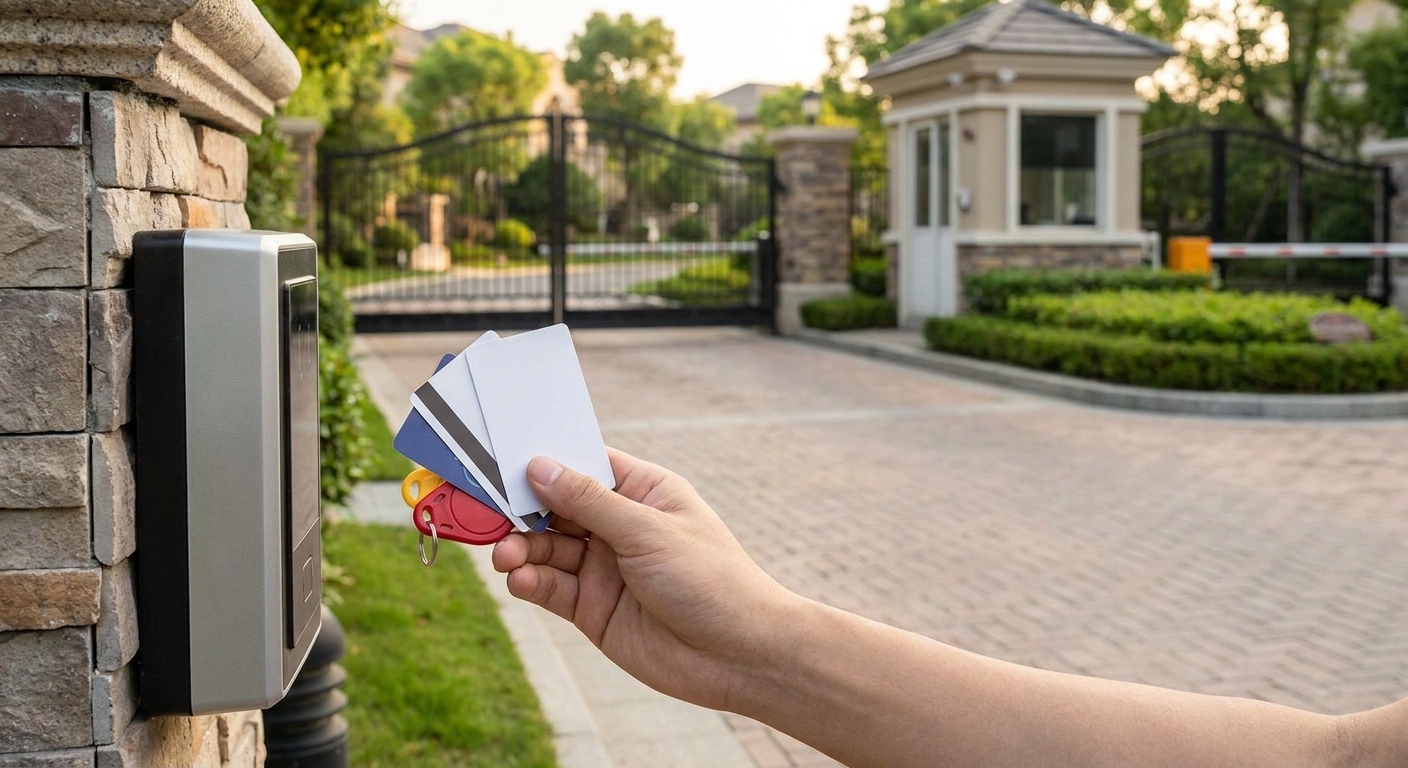
Gated communities buy proximity cards to control who drives or walks through the gate, and picking the wrong card format leaves the door open to cloning or a $15,000 reader upgrade three years early. This guide ranks the proximity card formats HOAs and property managers actually use in 2026, tells you which one to skip, and covers what you need on-site to print and encode them.
- 13.56 MHz MIFARE cards are the best proximity cards for gated communities balancing cost and security in 2026 — Buy.
- 125 kHz HID Prox cards are cheap but clone in under 10 seconds with a $30 reader — Skip for new gates.
- DESFire EV2/EV3 cards fit luxury developments with 500+ units where breach cost outweighs the higher per-card price — Buy.
- On-site encoding with a smart card encoder cuts reissue time from days to minutes for lost or stolen cards.
Why This Matters
A gated community isn't a warehouse dock door. Residents lose cards, guests need temporary access, and vendors need cards that expire on schedule. The card format you pick determines whether a lost card is a five-minute reissue or a locked-out resident waiting for a mailed replacement.
Most HOAs still run proximity cards for office access control-style 125 kHz systems installed a decade ago, and that's the first thing worth checking before you buy more cards for the same reader. The format on your existing readers dictates every card you can add going forward — mixing frequencies without a dual-tech reader means the new cards just won't work.
How This List Is Ranked
Each format below is scored on three factors that matter for gated community access in 2026: read range at the gate arm, resistance to cloning, and cost per card at typical HOA order volumes (250-1,000 cards). Frequency and encryption specs are standard across the access control industry, not brand-specific claims. Verdicts assume a community replacing or expanding an existing gate system, not building from zero.
The Ranked List
1. 13.56 MHz MIFARE Classic — the safe default
The most common upgrade path for HOAs moving off aging 125 kHz systems in 2026. MIFARE Classic cards carry basic encryption and typical per-card pricing lands in the $2-4 range at HOA order volumes, well under DESFire pricing.
Read range runs 2-4 inches at a standard gate reader, which is short enough to prevent accidental triggers from cars in adjacent lanes. It's not the newest format, but it's the one most gate hardware vendors stock readers for right now. Buy — it's the default for communities without a specific reason to go higher-security.
2. 125 kHz HID Prox-compatible — the legacy holdover
This is the oldest widely deployed proximity format and it still runs a huge share of installed gate systems. The problem: 125 kHz cards broadcast an unencrypted ID number, and a $30 cloning device copies that number in under 10 seconds.
Communities with readers already on this frequency can keep issuing matching cards short-term, but adding new cards to this format in 2026 is adding new vulnerabilities. Skip for new purchases; Hold only if you're mid-transition and replacing the reader within the next budget cycle.
3. HID iCLASS SE / SEOS — the security upgrade
iCLASS SE and SEOS cards add mutual authentication between card and reader, which stops the cloning attack that plagues 125 kHz cards outright. Per-card cost runs higher than MIFARE Classic, typically in the $5-8 range depending on order size.
These formats also support mobile credential provisioning, so residents can eventually carry access on a phone instead of a physical card. Buy for gated communities that had a card cloning incident or handle high-value assets like a marina or private airstrip inside the gate.
4. MIFARE DESFire EV2/EV3 — the high-security pick
DESFire EV2 and EV3 use AES-128 encryption and are the format banks and government facilities use for the same reason a gated community would want it: the encryption key never leaves the secure element on the card. Cost is the highest on this list, often $6-10 per card.
This is overkill for a 40-unit HOA but makes sense for large luxury developments running 500+ resident and vendor credentials where a single breach costs more than the card upgrade. Buy for large or high-value gated communities; Skip for small HOAs on a tight reserve budget.
5. Long-range UHF windshield tags — the vehicle-gate specialist
UHF tags aren't a proximity card in the badge-holder sense — they're adhesive windshield stickers read from 15-30 feet, letting the gate arm lift before the car stops. They solve a different problem than a wallet card: traffic backup at a single-lane gate during peak arrival hours.
They don't work for pedestrian gates or guest access and add a second credential system to manage alongside your resident cards. Consider as a supplement to a card system for vehicle gates with backup complaints; Skip as a standalone system.
6. Dual-technology cards (125 kHz + 13.56 MHz) — the transition bridge
Dual-tech cards carry both a legacy 125 kHz chip and a 13.56 MHz chip on one card, letting a community run old and new readers side by side during a hardware swap. Per-card cost runs a few dollars above single-frequency MIFARE cards.
The use case is narrow and temporary: a community mid-upgrade that can't replace every reader in one budget cycle. Consider only during an active reader transition; Skip once every gate reader supports the same frequency.
Comparison Table
| Format | Frequency | Clone Resistance | Best For | Verdict |
|---|---|---|---|---|
| MIFARE Classic | 13.56 MHz | Moderate | Most gated communities | Buy |
| HID Prox-compatible | 125 kHz | Low | Legacy systems only | Skip/Hold |
| iCLASS SE / SEOS | 13.56 MHz | High | Higher-security HOAs | Buy |
| DESFire EV2/EV3 | 13.56 MHz | Very high | Large/luxury developments | Buy |
| UHF windshield tag | 900 MHz | N/A (vehicle only) | Vehicle gate backup | Consider |
| Dual-tech card | 125 kHz + 13.56 MHz | Moderate | Active reader transitions | Consider |
Where To Buy
- Match the card to the reader you already own before ordering a single card — a 13.56 MHz card does nothing on a 125 kHz reader, and vice versa.
- Buy cards and the encoder from a vendor that supports on-site printing, so a lost card gets reissued in minutes instead of waiting on a mailed batch order.
- Order in batches of 250-500 for most HOAs — smaller runs cost more per card, and gated communities rarely need more than that between print cycles.
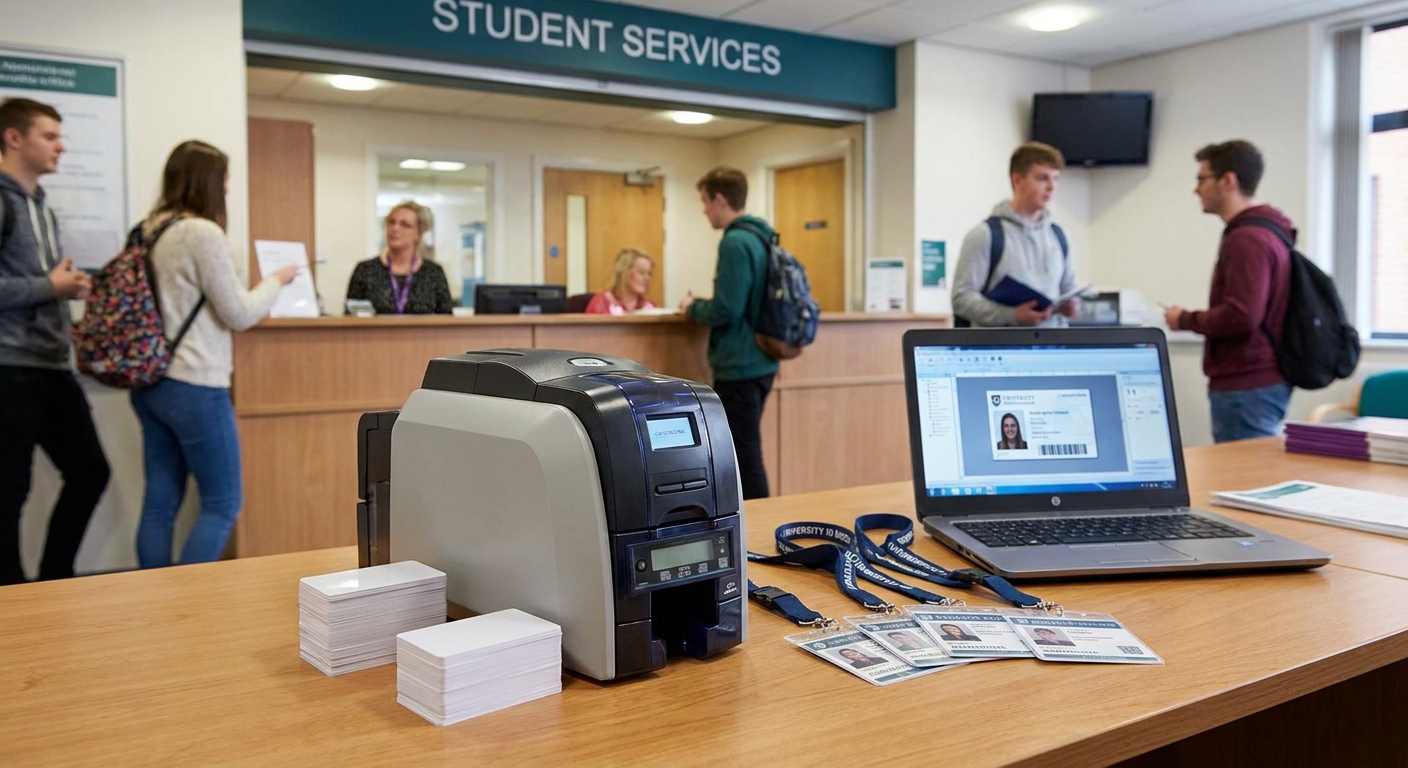
Communities that print and encode resident badges on-site instead of mailing every card out for encoding cut reissue turnaround from days to the same visit. That setup needs a printer capable of the card format you picked, plus an encoder module matched to it.


HOA offices and property management companies running a front desk share more with a small business printing operation than with a large enterprise deployment — the same considerations that apply to ID card printers for small businesses apply here: print volume, encoder compatibility, and how fast you can reissue a lost card matter more than raw print speed.
FAQ
What's the best proximity card for a gated community in 2026?
MIFARE Classic 13.56 MHz cards are the best proximity cards for gated communities in 2026 for most HOAs, balancing a $2-4 per-card cost with real cloning resistance. Larger or higher-security developments should move to DESFire EV2/EV3 instead.
Is 13.56 MHz better than 125 kHz for gate access cards?
Yes, 13.56 MHz cards support encryption that 125 kHz cards lack entirely. A 125 kHz card broadcasts an unencrypted ID number that a low-cost reader can clone in under 10 seconds.
How much do proximity cards cost per card?
MIFARE Classic cards run $2-4 per card at typical HOA order volumes of 250-1,000 cards. Higher-security DESFire EV2/EV3 cards run $6-10 per card because of the added AES-128 encryption.
Can a gated community print its own access cards on-site?
Yes, with a card printer and a matching encoder module, an HOA office can print and encode a badge in one visit instead of mailing cards out. This cuts lost-card reissue time from days to minutes.
What's the difference between a proximity card and a smart card?
A proximity card only carries an ID number read at short range, while a smart card includes an embedded chip capable of encryption and mutual authentication with the reader. iCLASS SE, SEOS, and DESFire cards are smart cards; 125 kHz Prox cards are not.
Do proximity cards work with mobile credentials?
iCLASS SE and SEOS formats support provisioning the same credential to a phone, letting residents use a mobile app instead of a physical card. Basic 125 kHz and MIFARE Classic cards don't support this.
How long do proximity cards last before they need replacing?
Most proximity cards hold up for several years of daily gate swipes before the antenna wears out from flexing. Replacement is usually driven by loss or a reader upgrade, not card failure.
Are cloned proximity cards a real security risk for gated communities?
Yes, 125 kHz cards are cloneable in under 10 seconds with commonly available hardware, which is the main reason HOAs upgrade to 13.56 MHz formats. Encrypted formats like MIFARE Classic and DESFire close that specific gap.
One Last Thing
The reader is the actual bottleneck, not the card. A community can buy the best-encrypted DESFire cards on the market in 2026 and get zero security benefit if the gate reader still only checks the card's raw ID number instead of running the authentication handshake — check what your reader actually validates before upgrading the card stock.