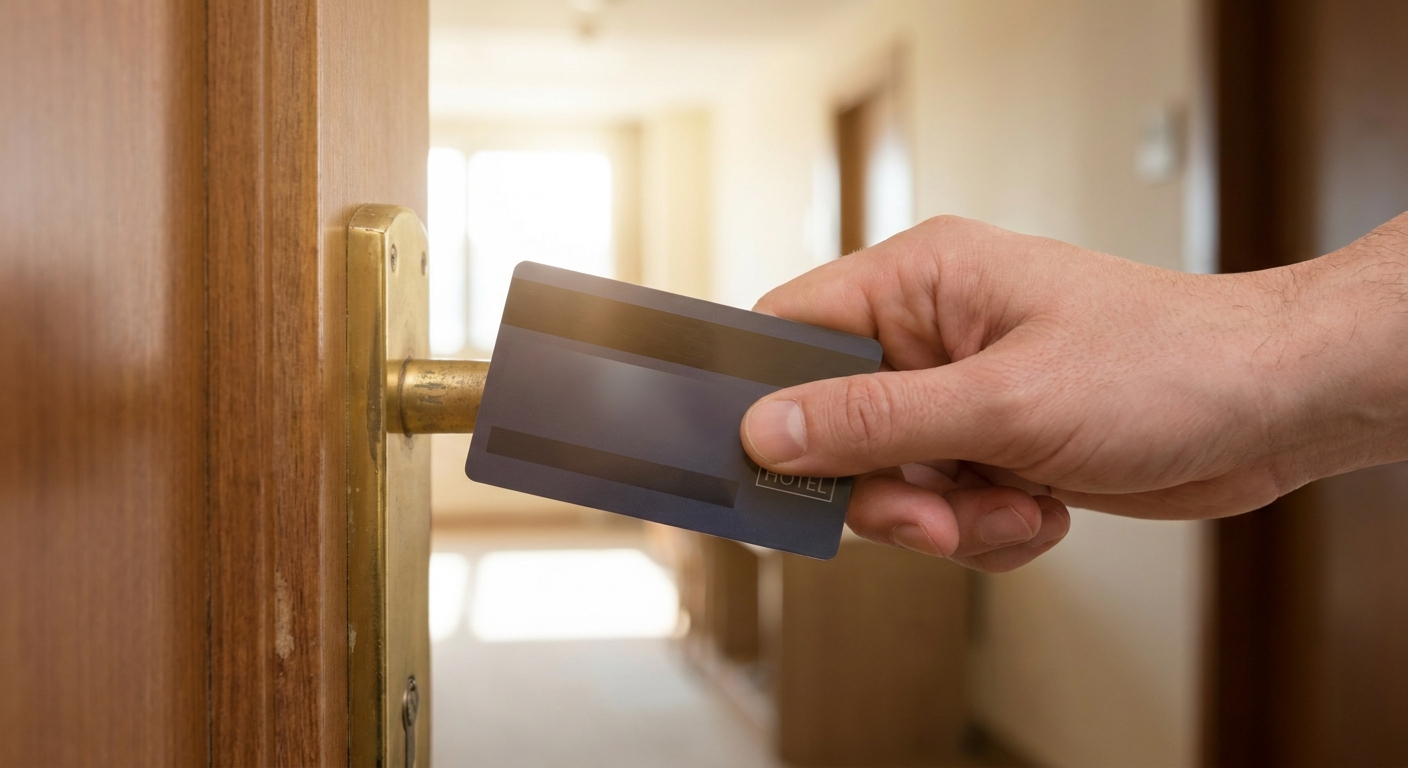
Hotel key card systems built on magnetic stripe technology only work if the card stock matches the coercivity, thickness, and track layout your lock vendor expects — get any of those wrong and a guest is standing at the door at midnight with a card that won't open. This guide covers what to check before you order and which printer and encoder setups handle in-house hotel key card production in 2026.
- Hi-Co magnetic stripe cards for hotel key cards resist demagnetization near phones better than Lo-Co — buy Hi-Co for guest rooms.
- The Bodno A-Series Magnetic Stripe Encoder Module adds Track 1/2/3 encoding to existing printers at $499 — Buy for in-house key production.
- Magicard 250X ID Card Printer at $1,349 handles under 150 keys a day for boutique properties — Buy for small hotels.
- Skip proximity-only cards when your lock vendor reads magstripe tracks — mismatched tech locks guests out.
- CR80 30-mil card stock is the thickness hotel lock readers expect in 2026 — thinner stock jams the reader.
Why This Matters
Outsourcing key card encoding to a lock vendor's proprietary system costs more per card and adds a reorder delay every time a property runs low. Printing and encoding magnetic stripe cards for hotel key card systems on-site at Bodno cuts that dependency, but only if the hardware and card stock actually match the lock reader on every guest room door.
Most hotel lock failures traced to card stock come down to two things: wrong coercivity and worn print heads scraping the stripe during a badly aligned print run. Both are avoidable once you know what to check.
Who This Is For
This guide is for hotel property managers, front desk operations leads, and hospitality IT staff who want to print and encode their own magnetic stripe key cards instead of paying per-card fees to a lock system vendor. It applies to independent boutique hotels, limited-service brands, and multi-property groups running their own badge and key production in-house.
What to Look For in Magnetic Stripe Cards for Hotel Key Card Systems
Coercivity: Hi-Co vs Lo-Co
Coercivity determines how much magnetic force it takes to write — and erase — the stripe. Hi-Co (4000 Oe) cards resist accidental demagnetization from phones, magnets, and pocket friction far better than Lo-Co (300 Oe) stock, which matters for guest room keys that ride around in a wallet all week. Most hotel lock brands standardized on Hi-Co for exactly this reason; confirm with your lock vendor before ordering a bulk run.
Card Thickness and CR80 Compliance
CR80 at 30 mil is the industry-standard thickness for hotel key cards, and it's what nearly every door lock reader is calibrated to accept. Thinner stock (10-20 mil) can jam feed mechanisms or read inconsistently in older mechanical strike readers still common in properties built before 2015.
Track Encoding Compatibility with Your Lock Vendor
Hotel locks read Track 1, Track 2, or Track 3 depending on brand — encoding the wrong track writes data the reader can't parse at all. Check your property management system integration docs or call your lock vendor's support line before you buy an encoder, because retrofitting the wrong track configuration means re-encoding your entire card inventory.
Durability Against Demagnetization
Guest room keys sit next to phones, hotel room safes, and other magnetic sources for days at a stretch. Hi-Co stock holds its encoding through that exposure far longer than Lo-Co, and that's the single biggest driver of front-desk re-key complaints in properties still running Lo-Co card stock in 2026.
Cost Per Card at Hotel Turnover Volume
A 200-room property with 70% average occupancy and two-night average stays runs through tens of thousands of key cards a year. At that volume, a $0.10 difference in per-card cost adds up fast — run the math on card stock plus ribbon cost per card before locking in a supplier.
Printer and Encoder Compatibility
Not every ID card printer encodes magnetic stripe out of the box — most need an add-on encoder module matched to the printer platform. Confirm the encoder supports your lock vendor's track format before buying the printer, not after.
“If the coercivity doesn't match the reader, the card fails before you finish handing it to the guest.”
Top Picks for In-House Hotel Key Card Production
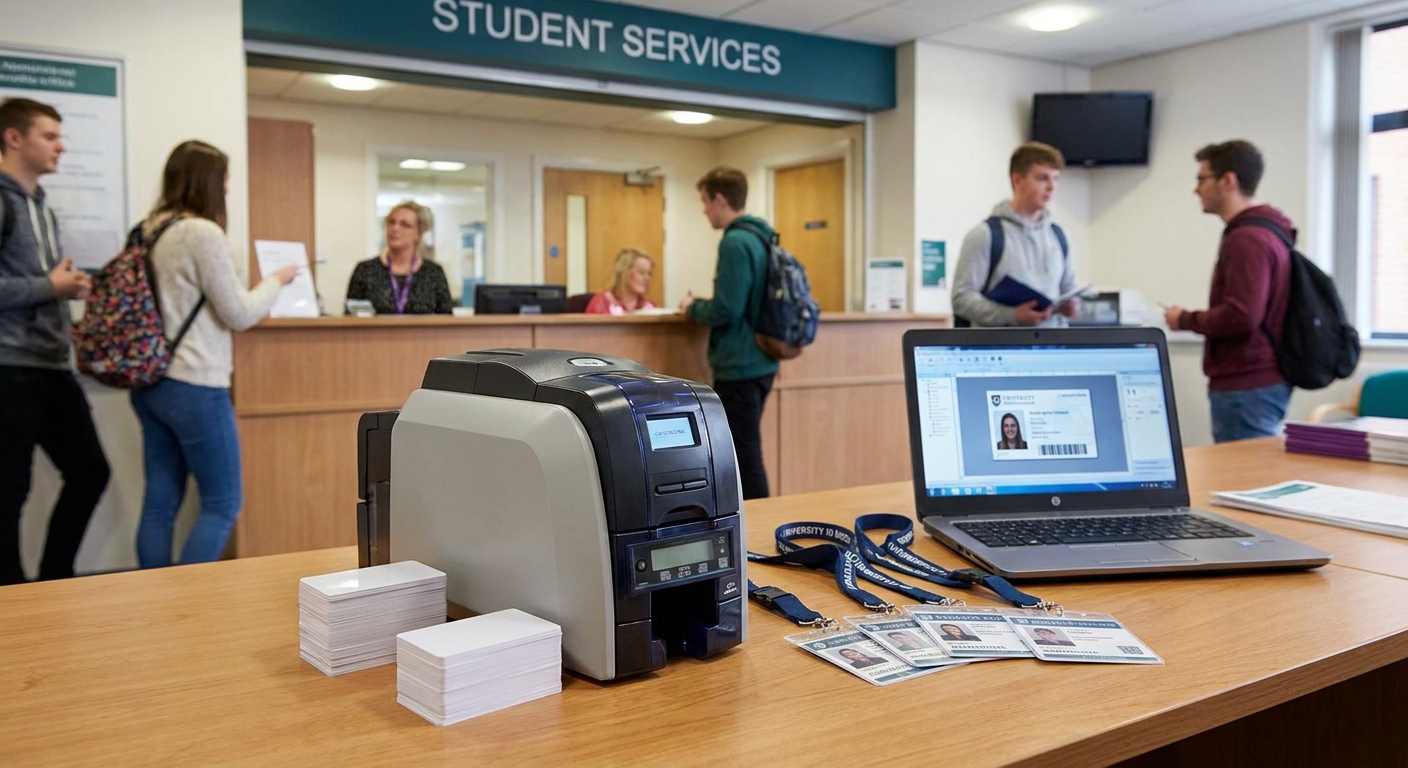
The safe pick — Magicard 250X ID Card Printer. This single-sided printer costs $1,349.00 and handles print volumes under 150 keys a day, which covers most boutique and limited-service properties. Pair it with the Magicard CN100 Color Ribbon at $64.99 for badge-quality output on the visual side of the card. Verdict: Buy for properties under 150 rooms running one front desk station.
The essential add-on — Bodno A-Series Magnetic Stripe Encoder Module. At $499.00, this module bolts onto compatible A-Series printers and adds Track 1/2/3 magnetic stripe encoding to a printer that otherwise only handles visual print. It's the piece most hotels skip when budgeting, then discover they need it two weeks into deployment. Verdict: Buy — this is non-negotiable if you're printing key cards rather than just badges, and it belongs in the same order as your ID card printers for small businesses short list.
The high-volume option — Seaory R330/R660 platform with Seaory 69053 Color Ribbon. The YMCFK ribbon runs $199.99 and is built for the Seaory R330 and R660 printers, which handle the higher daily throughput a 200+ room property needs during a full occupancy weekend. Verdict: Consider if your property runs more than 300 encoded cards a week — the throughput justifies the platform cost, but smaller properties should stick with the Magicard route.
The legacy-fleet option — Fargo 45140 Ribbon for existing DTC4250e printers. At $99.99, this keeps a property with an existing Fargo fleet running without a hardware swap. Verdict: Consider only if you already own the Fargo DTC4250e — it's not worth buying the printer new just to use this ribbon.


What to Avoid
- Proximity-only cards when your locks read magstripe. RFID prox cards look similar and get ordered by mistake, but a lock reading Track 2 can't parse an RFID chip — check the proximity cards for office access control breakdown before assuming your access control needs match your key card needs.
- Lo-Co stock for guest rooms. It's cheaper per card but demagnetizes faster near phones and magnets, driving up front-desk re-key volume within weeks.
- Unbranded card stock with no coercivity spec listed. If a supplier can't tell you Hi-Co or Lo-Co and Oe rating, the batch is inconsistent — expect a failure rate you can't predict.
Verdict Comparison
| Pick | Coercivity Support | Daily Throughput | Cost | Verdict |
|---|---|---|---|---|
| Magicard 250X + CN100 ribbon | Hi-Co (with encoder module) | Under 150 keys/day | $1,349 + $64.99 | Buy |
| Bodno A-Series Encoder Module | Track 1/2/3, Hi-Co | Add-on, no cap | $499 | Buy |
| Seaory R330/R660 + 69053 ribbon | Hi-Co | 300+ keys/day | $199.99 (ribbon) | Consider |
| Fargo DTC4250e + 45140 ribbon | Hi-Co (existing fleet) | Under 100 keys/day | $99.99 (ribbon) | Consider |
FAQ
What's the best magnetic stripe card for hotel key card systems?
Hi-Co (4000 Oe) CR80 30-mil card stock is the best fit for most hotel key card systems in 2026 because it resists demagnetization from phones and magnets far longer than Lo-Co stock. Confirm your lock vendor's track requirement (Track 1, 2, or 3) before ordering.
Is Hi-Co or Lo-Co better for hotel door locks?
Hi-Co is better for hotel door locks because it holds its magnetic encoding through daily wear and exposure to other magnetic sources. Lo-Co costs less per card but drives higher re-key rates at the front desk.
How much do magnetic stripe hotel key cards cost?
Blank Hi-Co card stock typically runs a few cents to under a dollar per card depending on order volume, separate from printer ribbon cost. A 200-room property running high turnover should model per-card cost against annual volume before choosing a supplier.
Can I encode my own hotel key cards on-site?
Yes, with a printer that supports an add-on magnetic stripe encoder, such as the Bodno A-Series Magnetic Stripe Encoder Module at $499. This removes dependency on a lock vendor's proprietary encoding service and per-card fees.
Do I need a special printer for magnetic stripe hotel cards?
You need a printer with magnetic stripe encoding support, either built in or added through a compatible encoder module. Not every ID card printer supports this out of the box, so confirm compatibility before buying.
What track do hotel locks use for key cards?
It depends on the lock brand — most use Track 2, though some systems read Track 1 or Track 3. Check your property management system's integration documentation or call your lock vendor's support line to confirm before encoding a batch.
How long do magnetic stripe key cards last before demagnetizing?
Hi-Co cards typically hold encoding through a full guest stay and repeated re-issues, while Lo-Co cards can fail within days if kept near a phone or magnet. Actual lifespan depends on handling and exposure, not just card quality.
Is proximity RFID better than magnetic stripe for hotels?
Neither is universally better — it depends entirely on what your existing lock hardware reads. Switching from magstripe to RFID requires replacing the door lock readers, not just the cards.
One Last Thing
Most hotel key card complaints trace back to a card stored next to a phone or a magnetic hotel safe for more than a day — Hi-Co stock survives that exposure, Lo-Co usually doesn't. Before switching card suppliers, ask for the coercivity rating in writing; "magnetic stripe card" alone tells you nothing about whether it'll survive a three-night stay in a guest's pocket.